Prioritize critical circuits
Separate essential loads from discretionary loads so the backup target remains realistic and controllable.
Project-matched hybrid solar systems combining inverter, LiFePO4 battery, PV modules and protection for homes facing unstable grids, scheduled outages or extended interruptions.
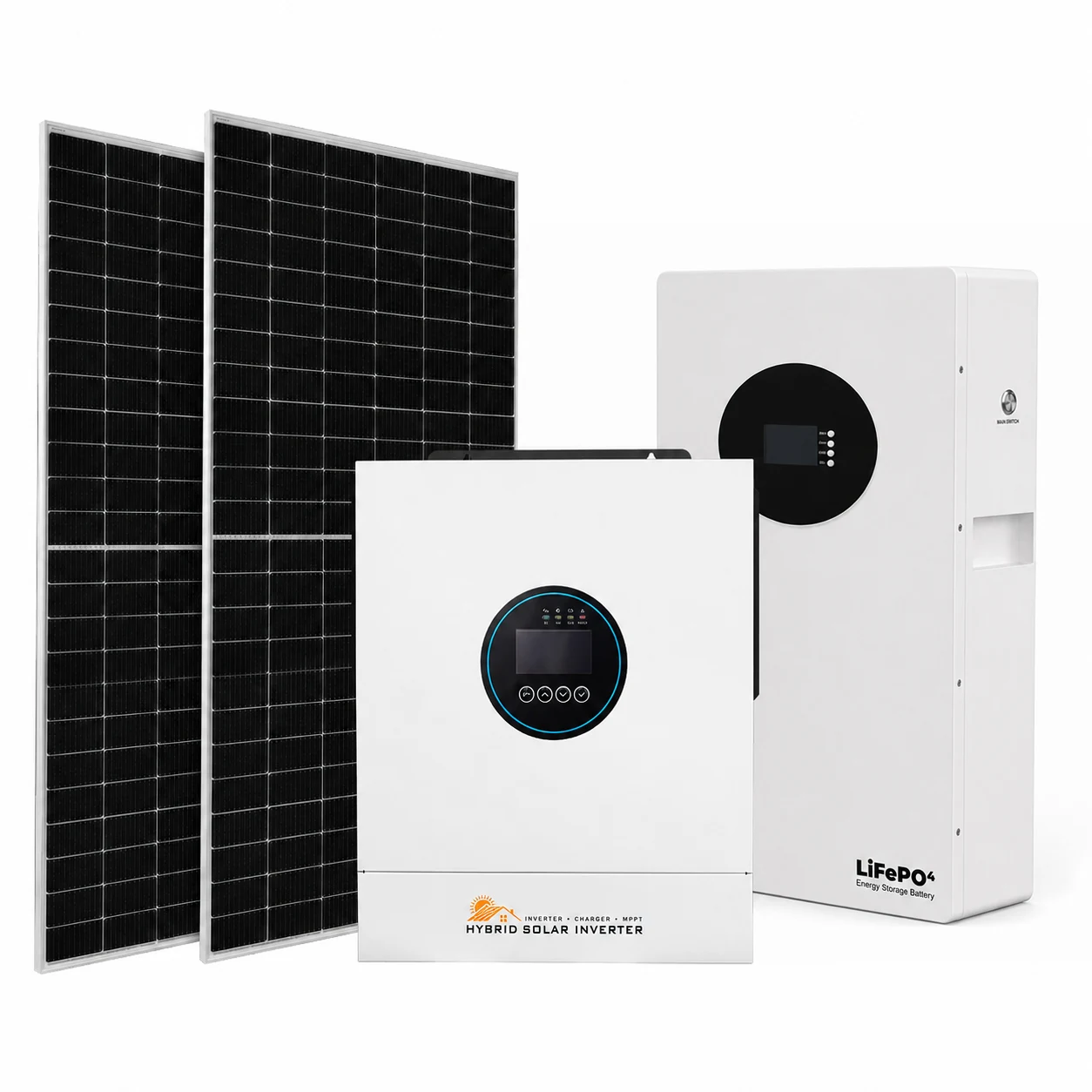 Reference equipment arrangement · final configuration is project-specific
Reliable selection starts with simultaneous load, starting surge, daily energy use and required backup time. Local voltage, phase, grid or generator conditions and the installation environment must also be confirmed.
Separate essential loads from discretionary loads so the backup target remains realistic and controllable.
Match solar, battery, grid and optional generator behavior to local outage patterns and energy availability.
Size storage from load energy and backup hours, then allow for efficiency, reserve and future changes.
Review local project context, then confirm phase, voltage, frequency, grid behavior, climate, compliance scope and installation responsibility before ordering.
Add the essential loads that may run together and check the largest motor or compressor starting surge. Then confirm phase, voltage, battery platform, PV limits and future expansion.
Multiply essential load energy by the required backup duration, then account for usable depth of discharge, inverter and battery losses, reserve margin and expected future loads.
Applicable hybrid inverter configurations can coordinate grid and generator charging, but input voltage, frequency, capacity, charge current and operating logic must be confirmed for the selected equipment.
No. It shows a representative equipment arrangement. Final inverter, battery, PV and protection selection depends on the actual project information.
Include the destination country, phase, voltage, frequency, grid and generator conditions, PV information and estimated quantity.
Request a Proposal →